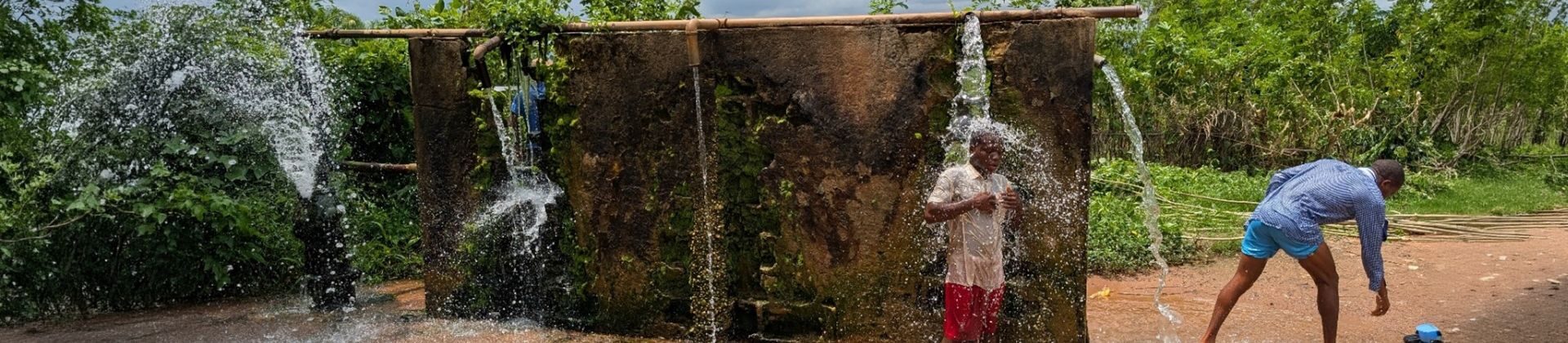
What if countries facing the same groundwater challenges could learn from one another? That simple yet powerful question gave birth to the Community of Practice (CoP), a key activity under sub-component 3.4 of the G4DR project, designed to strengthen people’s resilience through better groundwater management.
This CoP is led by the SADC-Groundwater Management Institute (SADC-GMI) under Component 3 of the project, in close collaboration with national ministries in Benin, Malawi, Mozambique, Togo, and Uganda, and the idea was simple: to create a space where the participating countries could learn together, progress together, and build shared solutions. Every three months, CoP members meet online. So far, three productive sessions have been held, not for rigid presentations, but to exchange, compare experiences, and reflect on how to turn on-the-ground challenges into opportunities for action. To date, three key lessons have stood out.
First, the importance of harmonised monitoring. Teams have realised that to manage shared resources effectively, everyone must speak the same language — use the same tools, collect similar data, and apply consistent methods. This shared approach not only strengthens data comparability but also enhances trust across borders. Only then can groundwater information be reliable, comparable, and truly useful for decision-making.
Second, the crucial role of local communities. In several countries, monitoring equipment has been damaged or removed simply because people didn’t understand its purpose. These incidents reminded everyone of a fundamental truth: without community ownership, there can be no sustainability. When people understand why these installations exist and how they contribute to their well-being, they become the first guardians of the resource.
Finally, the power of peer learning. Through exchanges, countries are discovering what works elsewhere — collaborative methods, redesigned monitoring networks, and shared management strategies. This spirit of co-learning strengthens the collective capacity to decide, plan, and invest more wisely.
Today, the Community of Practice is well on its way to becoming much more than just coming together; it’s building momentum. By synthesising the lessons learned in these ongoing meetings, the CoP can facilitate the transformation of on-the-ground experiences into collective knowledge, ensuring that every planning decision and every investment in groundwater is targeted, more inclusive, and truly sustainable for the communities that rely on it. As the CoP continues, these shared insights will feed into regional policy dialogue and the wider G4DR knowledge platform, ensuring that learning from the ground informs decisions at every level.